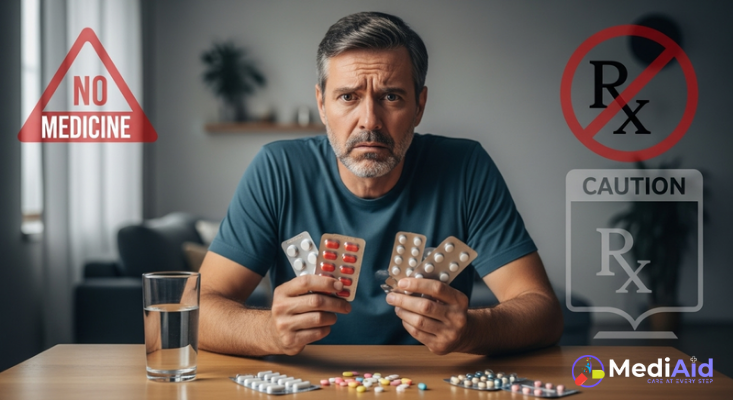
Many people use medicines without consulting a doctor—whether leftover antibiotics or over-the-counter painkillers. However, self-medicating can be risky and dangerous. Here’s why it's crucial to seek medical advice before taking any medication:
1. Wrong Diagnosis = Wrong Treatment
Doctors diagnose conditions before prescribing medication. Taking medicine without knowing the cause can:
- Mask serious conditions (like treating chest pain with painkillers instead of checking for a heart problem)
- Delay proper treatment
- Lead to complications
2. Incorrect Dosage & Usage
Incorrect amount or improper usage can lead to:
- Overdose
- Ineffective treatment
- Harmful side effects (e.g., liver damage from excessive paracetamol)
3. Dangerous Drug Interactions
Only healthcare providers can check for:
- Drug-drug and drug-food interactions
- Allergy risks (e.g., severe reactions from mixing certain antibiotics with alcohol)
4. Antibiotic Resistance
Using antibiotics without guidance increases resistance, making infections harder to treat in the future.
5. Masking Serious Illnesses
Self-medication might conceal symptoms of:
- Heart disease
- Cancer
- Infections, leading to delayed diagnosis and treatment
6. Addiction & Dependence
Certain medicines can be addictive (e.g., painkillers, sleeping pills). Self-medicating increases the risk of tolerance, dependence, and withdrawal symptoms.
Who’s at Higher Risk?
Self-medicating is particularly risky for:
- Children
- Elderly individuals
- Pregnant or breastfeeding women
- People with chronic diseases, posing risks like harm to babies or complications in kidney function.
Real-Life Examples
Instances include:
- Excessive NSAID use leading to stomach bleeding
- Resistant infections from improper antibiotic use
- Falls and confusion in elderly patients due to self-medication
Avoid These Mistakes:
- Do not reuse old prescriptions
- Do not take someone else’s medication
- Do not exceed recommended doses
- Do not stop prescribed medication without consulting your doctor
What Should You Do?
- Always consult a doctor or pharmacist before taking any medication.
- Follow prescription instructions precisely.
- Maintain a medication list to prevent duplications or interactions.
- Store medicines safely and dispose of expired drugs properly.
In Summary:
Taking medicine without medical advice may seem harmless but can result in incorrect treatment, side effects, allergies, drug interactions, addiction, or life-threatening situations. Protect your health—always talk to your doctor first.